Citrus County restoration contractor
Citrus County restoration contractor: repair that starts with an honest scope.
Based in Citrus Springs, iFIXED rebuilds after water, fire, smoke, and storm damage across Citrus County. Every scope is itemized by room and trade, with dated photos, so your adjuster can check it line by line.
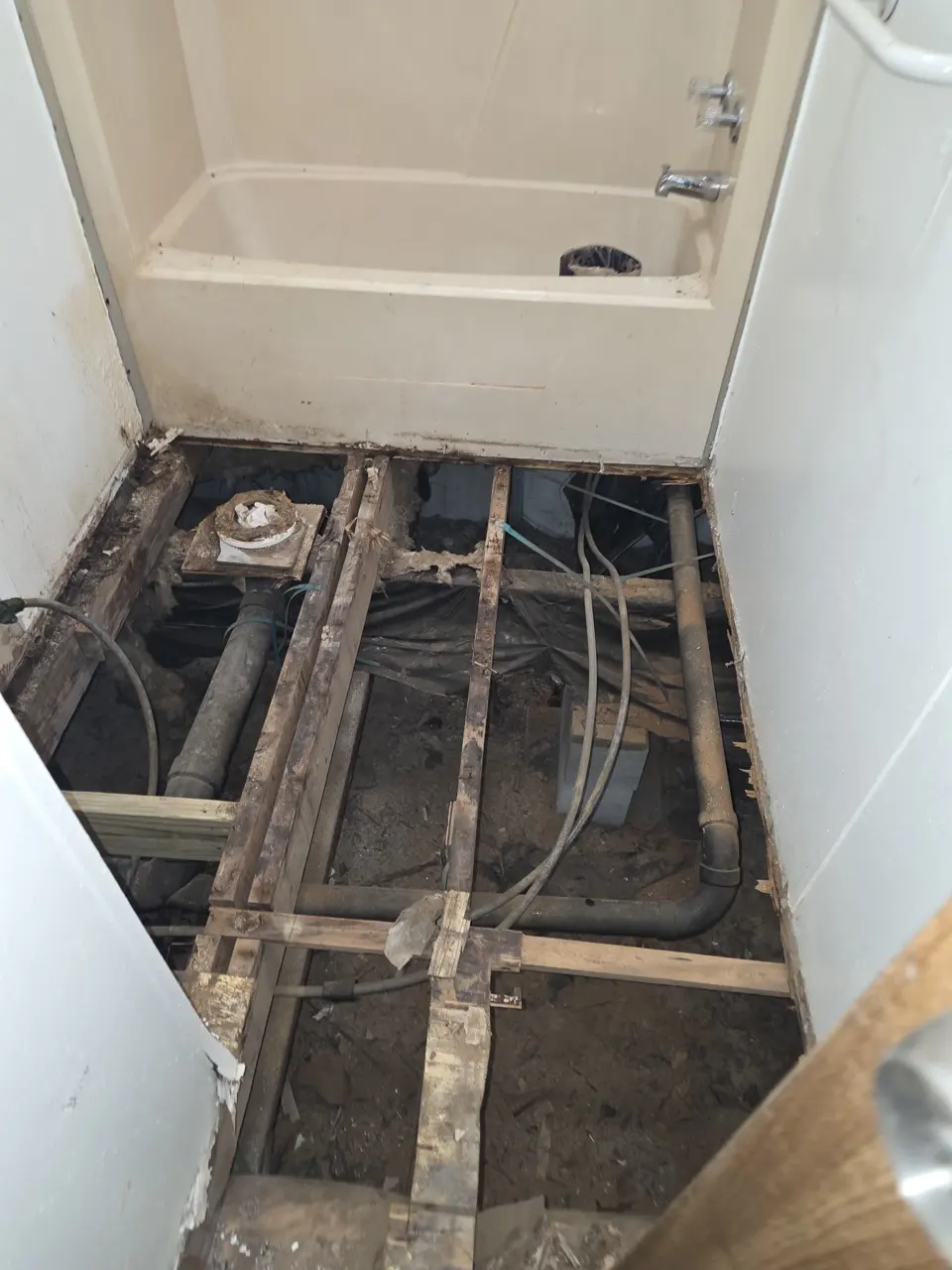
Damage travels further than the stain.
The visible mark is where the loss shows, not where it stops. Water follows framing and gravity. Smoke follows air. Wind finds the opening you cannot see from the ground. A scope that only covers the obvious room is why so many repairs get reopened as a supplement later.
Fire restoration contractor in Citrus County
After a fire, the burn area is only part of the scope. Smoke moves through the house, so rooms that never saw flame can still need cleaning, sealing, and repainting. We scope those rooms along with the burn area so the estimate covers the whole loss.
The rebuild runs in order. Charred framing and sheathing are replaced. Sound structure is cleaned and sealed with a stain- and odor-blocking primer. Then drywall, flooring, trim, and paint go back. Tell us whether the property has been cleared for work and whether a claim is open.
Where restoration starts, and what comes first
If water is still active, or the structure has not been dried and cleared, emergency mitigation comes first. That stage is usually handled by a mitigation company with drying equipment and moisture logging. Tell us where the property stands. We plan the repair around what has already been done, and we ask for the mitigation company's moisture readings and drying logs so the rebuild does not start over damp material.
Not all storm water is treated the same. The restoration industry's IICRC standard classifies water by contamination, and IICRC guidance is that weather-related water is not automatically the most contaminated category; it is judged on inspection. Seawater and rising floodwater often are. That classification drives how much material comes out, so we ask what the mitigation company found.
From there, the work is ordinary construction done in a disciplined order: confirm the demolition line, correct framing or subfloor damage, close the assembly, then run the finish trades. The difference is that a restoration scope has to prove what was damaged, not just describe what will be installed.
Local conditions
Storm damage in Citrus County: what the last three hurricanes showed
Idalia, August 2023. The National Weather Service recorded water 7.01 feet above normal high tide at the mouth of the Crystal River, with 4 to 7 feet along the rest of the Citrus coast and more than 6,450 structures inundated, most of them homes.
Helene, September 2024. A year later, Helene broke Idalia's record at the Crystal River gauge, peaking at 7.70 feet, with 5 to 8 feet along other parts of the coast. The county's growth management director reported about 7,000 coastal structures affected. Milton followed two weeks later with river flooding along the Withlacoochee instead of coastal surge.
The 50 percent rule decides what can be rebuilt. In a FEMA flood hazard area, Citrus County applies a substantial damage rule: if repairs would cost 50 percent or more of the building's market value, land excluded, the building has to meet current flood standards, which can mean elevating it. After Helene, the county found about 100 homes substantially damaged, mostly in coastal communities such as Ozello and Homosassa. Flood insurance's Increased Cost of Compliance coverage can help pay for that work. We write repair scopes with that determination in mind, and you can check your flood zone on the county's address lookup.
Inland homes take a different kind of hit. Away from the surge zone, losses tend to come from roof and envelope failures, wind-driven rain at windows and soffits, and fallen trees. That damage is smaller per house, and it can hide in ceilings and walls for months before it shows.
Storm figures from National Weather Service Tampa Bay event summaries and the Citrus County Chronicle; flood rules from the Citrus County floodplain management pages. Requirements are set per parcel by the authority having jurisdiction.
Florida rules every homeowner should know before hiring for a claim
Florida rewrote its property-claim rules between 2021 and 2024. These are the ones that most affect a repair:
What to send for a restoration estimate
- What happened and roughly when, whether the source has been stopped, and whether anyone has dried the space.
- Wide photos of each affected room, plus close-ups of ceilings, walls at floor level, and any staining, soot, or buckling.
- Whether a claim has been filed, and the adjuster's estimate or scope if you have one.
- Which rooms must stay usable, and whether anyone is living in the property during the work.
Where we work
Citrus County first, from our base in Citrus Springs, with work across Marion, Sumter, Hernando, and Levy counties and a staffed Tampa Bay team. The Citrus County page covers local permitting and flood details.
Restoration contractor in Citrus County: common questions
Are you a restoration contractor in Citrus County?
Yes. Based in Citrus Springs, iFIXED repairs and rebuilds after water, fire, smoke, and storm damage across Citrus County, including Crystal River, Homosassa, Inverness, Beverly Hills, and Lecanto, and in nearby Marion, Sumter, Hernando, and Levy counties.
Are you a fire restoration contractor in Citrus County?
Yes. We replace charred framing and sheathing, clean and seal sound structure with a stain- and odor-blocking primer, and scope smoke-affected rooms beyond the burn area so the estimate covers the whole loss.
Do you handle emergency water extraction and drying?
No. Extraction, structural drying, and moisture logging are a separate first stage handled by a mitigation company with drying equipment. iFIXED does the repair and rebuild that follows. If nothing has been done yet, say so in your first message and we will tell you what has to happen before repair work can be scheduled.
How long do I have to file a property insurance claim in Florida?
Under Florida Statute 627.70132, notice of a new or reopened claim must be given to your insurer within 1 year of the date of loss, and notice of a supplemental claim within 18 months. For a hurricane or windstorm, the date of loss is the landfall date. Check your policy and talk to your insurer for your specific claim.
Will you work with my insurance adjuster?
Yes. We write an itemized scope by room and trade, with dated photos and measurements, that your adjuster can compare line by line against their own estimate. Florida law does not allow contractors to interpret your policy or adjust your claim, so we do not do either. We document the damage and the repair.
Will you waive or cover my deductible?
No. Florida treats paying, waiving, or rebating an insurance deductible as insurance fraud. Any contractor who offers to do it is a reason to keep looking.
Do you take an assignment of benefits?
No. For Florida residential policies issued on or after January 1, 2023, assignment of post-loss benefits is void under state law. You stay the claimant and stay in control of your claim.
Can you remove mold?
Mold remediation over 10 square feet must be done by a licensed mold remediator in Florida. We rebuild after remediation is complete, and we will ask for the clearance documentation before closing up walls.
What is the 50 percent rule after storm damage?
In a FEMA flood hazard area, if repairing a damaged building would cost 50 percent or more of its market value (land excluded), Citrus County treats it as substantially damaged, and the building must be brought up to current flood standards, which can mean elevation. After Hurricane Helene, the county identified about 100 substantially damaged homes, mostly on the coast. We document the repair scope with that determination in mind.
What happens when the damage is worse than it looked?
It often is, because the first assessment happens before demolition. When opening a wall or pulling flooring reveals damage nobody could have seen, we stop, photograph it in place, and document it as a supplement with the reason it was not visible earlier.
Veteran-owned and an SBA-certified SDVOSB, based at 2571 W Diane Ln, Citrus Springs. Public buyers can review credentials on our government contracting page.